
Basketball Career Sim 2026
Vule GamesSports
4.419.00 Reviews
- Version
- 1.0.4
- Installs
- 10.00K
- Age Rating
- Everyone
Screenshots
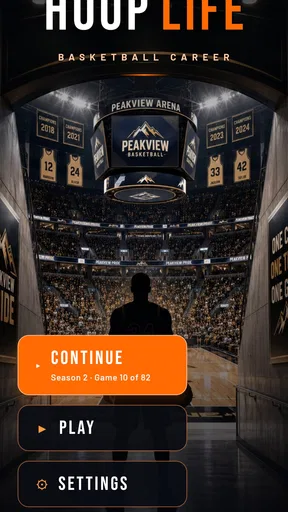
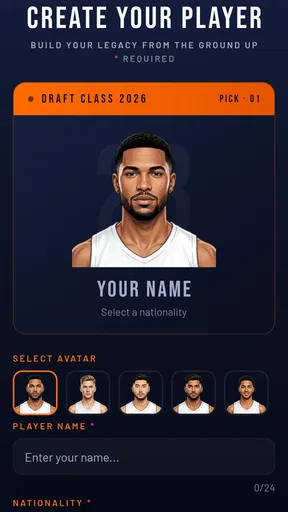
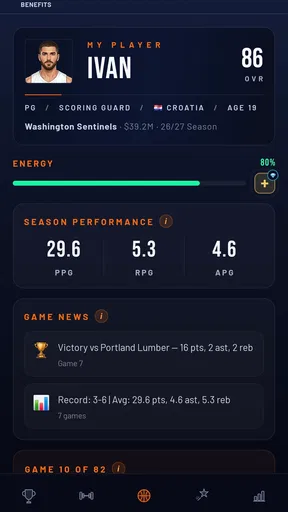
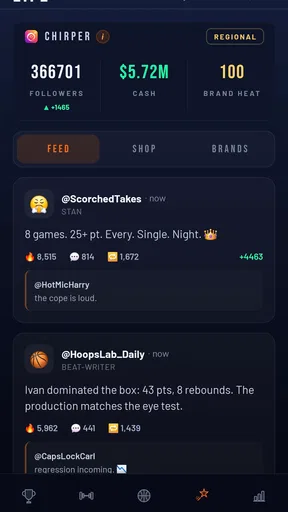
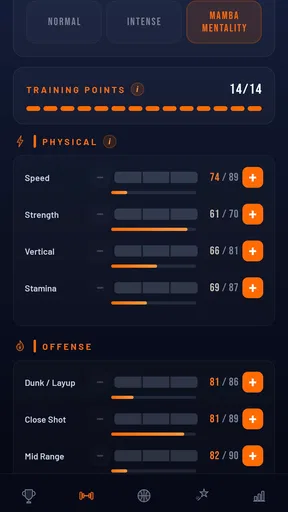
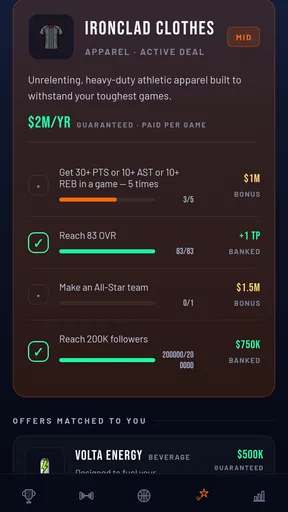
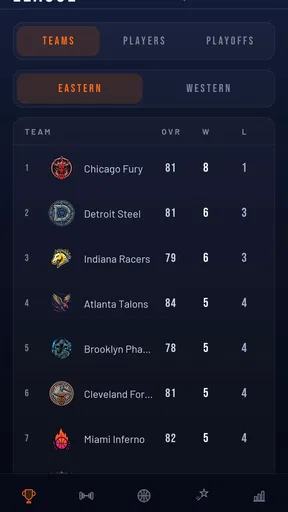
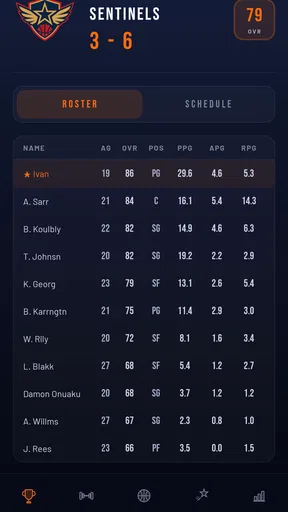
Our Review of Basketball Career Sim 2026
 Analysis by Appyee
I went into Basketball Career Sim 2026 expecting a straightforward sports management game, but its appeal is more personal than that. Developed by Vule Games, it puts me in the role of someone trying to build a basketball career rather than simply controlling isolated matches. The result is a compact career-focused experience that works especially well when I want to make a few decisions, check how my path is developing, and then put the game down without needing a long uninterrupted session.
That focus also explains why this game feels different from a typical basketball title. I am not picking it up for realistic on-court controls or a large multiplayer competition. I am here for the fantasy of becoming a baller, managing the direction of a career, and seeing whether my choices lead to a stronger version of that player. It is free to start, rated for Everyone, and available on devices running Android 7.0 or later. The current version is 1.0.4, which makes it easy to approach as a lightweight sports game rather than a demanding simulation package.
My first impression was shaped by the contrast between its simple entry point and the longer-term idea behind it. The store short description calls it a basketball career sim, and that is the right way to frame it: this is less about one spectacular game and more about the steady rhythm of building a sporting life. I found that appealing during short breaks, especially because the offline focus means I can treat it as a self-contained activity instead of another game that constantly expects an internet connection.
Finding a basketball identity beyond the court
The setting works because it gives ordinary decisions a sense of direction. In a conventional basketball game, the main question is often whether I can score, defend, or execute a play. Here, the larger question is what kind of career I am trying to create. That change in viewpoint gives the experience its own language. Progress feels less like winning a single contest and more like shaping a player’s reputation and future.
I especially liked the way the career framing encourages me to think in chapters. A poor choice does not feel like the entire game has collapsed; it becomes part of the story I am building. That makes the sports setting feel more human than a simple scoreboard loop. I can imagine a player who develops patiently, another who chases immediate progress, and a third who experiments simply to see how different choices affect the journey.
The art direction supports this sense of an accessible sporting world. I did not read the presentation as an attempt to compete with a console-style basketball production. Instead, it keeps attention on the player’s path and the decisions surrounding it. That restraint is important. A career simulator can become cluttered when every screen tries to look dramatic, but this game benefits when the visual language remains easy to read and lets the management layer do the storytelling.
That simplicity is also the first major trade-off. Anyone searching for lifelike arenas, detailed player likenesses, or the feeling of physically controlling every possession should adjust expectations before installing it. The attraction is the career fantasy, not a full replacement for a traditional basketball action game. If my priority is shooting mechanics, defensive positioning, or competitive online play, I would choose a different kind of sports title.
For me, the strongest use case is a quiet, repeatable routine. I can open the game while waiting for a train, make a few career decisions, think about whether I am prioritizing immediate gains or a more careful route, and leave with the feeling that the player’s story has moved forward. That is more satisfying than it sounds because the basketball context gives those small choices a clear purpose.
How I approached the career loop
I found it useful to treat each session as a planning window rather than a demand for constant action. Instead of rushing through every available decision, I would first consider what kind of player I wanted the career to represent. That small pause made the game feel more deliberate and helped me avoid making choices simply because they appeared to offer the quickest reward.
One practical tip is to use the offline nature as part of the routine rather than viewing it as a technical footnote. This is a good fit for places where connectivity is unreliable or where I do not want a game competing with notifications and live events. It also changes the mood: the experience feels more like a personal notebook for a basketball career than a service that is always asking me to return at a particular time.
A second useful approach is to avoid judging the game after only one short visit. The premise depends on accumulation. A single decision can be enjoyable, but the real satisfaction comes from seeing a pattern form across several sessions. I would recommend giving it enough time to reveal whether its pace matches the way I like to play before deciding that it is too simple or too slow.
Sound, pacing, and the mood of a private sports story
The game’s mood comes primarily from its pacing. It does not push me into the frantic tempo of a live basketball match, and that is a deliberate strength. The slower structure leaves room for reflection, which suits a career simulator better than constant visual noise would. I can focus on what the next step means instead of reacting to every second of play.
That rhythm creates a surprisingly calm interpretation of basketball. The sport is usually presented through speed, crowd energy, and immediate pressure, while this game is interested in the quieter parts of ambition: choosing a direction, accepting setbacks, and continuing to build. I enjoyed that difference because it makes the title feel coherent. The setting, presentation, and career premise point toward the same kind of experience.
Sound has a supporting role rather than dominating the session. I would not approach this as an audio showcase. The important thing is that the overall presentation does not fight the management pace. I can play in short bursts without feeling that I am missing the central attraction simply because I am not constantly watching an action sequence.
This pacing also answers an important question about who should skip the game. If I want the emotional rush of a close match, the tactile satisfaction of a perfect shot, or the social pressure of competing against other people, the quiet career rhythm may feel underpowered. The game is better for players who enjoy progression and decisions than for those who measure basketball fun by direct control.
There is another trade-off here: a relaxed pace can become repetitive if I expect every session to introduce a dramatic change. I found the experience more enjoyable when I accepted that progress might feel gradual. The game asks for patience, and that patience is part of its identity. Players who prefer constant unlocks or rapid visual rewards may find the career structure less immediately exciting.
Making the most of short sessions
My preferred everyday scenario is playing during a lunch break. I do not need to prepare for a full match or find a stable connection. I can check the current direction of the career, make a considered choice, and stop when the break ends. Later, I can return with a clear sense of what I was trying to achieve rather than having to remember a complicated real-time sequence.
Another good situation is travel. Offline play makes the game more practical on a flight, in a waiting room, or anywhere I would rather not rely on mobile data. It is not a substitute for a deep, long-form management computer game, but it fills the space between a casual arcade title and a demanding simulator. That middle ground is where I think it makes the most sense.
I also recommend keeping the sound and visual presentation in perspective. They help establish the game’s mood, but the career decisions remain the reason to return. If I treat the atmosphere as a frame around the mechanics, the experience feels focused. If I expect the presentation alone to carry long sessions, the limited scope becomes more noticeable.
Where the mechanics fit—and where they do not
The mechanical fit is strongest when I want a sports game that turns basketball into a sequence of career choices. The offline design supports that goal because it keeps the focus on my own progress rather than on live competition, timed events, or an online community. I can play at my own pace, which is valuable for anyone who dislikes games that punish irregular schedules.
The game also works for people who enjoy imagining the person behind the statistics. Even without treating it like a spreadsheet, I found myself thinking about the consequences of a decision and the kind of career it represented. That is the non-obvious appeal: the basketball theme gives structure to a personal progression loop, so the game can feel more involving than a generic menu-based simulator.
Still, I would not describe it as a complete substitute for a major basketball franchise. Those games are better when I want licensed presentation, detailed match control, advanced tactical systems, or a large competitive ecosystem. A traditional manager may also be a better choice for someone who wants to control an entire club, handle a broad roster, and focus on team-level strategy. This title is narrower, and that narrowness is both its identity and its limitation.
There is also a financial consideration. The game is free, but optional in-app purchases range from $0.99 to $79.99 per item. I would approach those purchases carefully and decide first whether the basic career loop already gives me the kind of experience I want. The wide range means the game can remain accessible at the start while still offering expensive optional spending, so anyone trying to keep a strict budget should pay attention before confirming a purchase.
The age rating of Everyone makes the game approachable for a broad audience, but that does not mean it will suit every age equally. Younger players may enjoy the simple basketball fantasy, while older sports fans may want more depth than the presentation provides. I see it as a good introduction to career-style sports play, particularly for someone who likes the idea of progression but does not want a complicated management interface.
One of my more useful lessons was to separate “career progress” from “instant success.” A decision that seems less exciting in the moment may fit a longer plan better than the fastest visible reward. I cannot promise that every player will encounter the same satisfying arc, but the game becomes more interesting when I play with a clear intention instead of tapping through choices without considering the direction.
Another tip is to use the game as a companion to real basketball interest rather than as a replacement for watching or playing the sport. After following a real game, I found the career framing more engaging because I was already thinking about roles, development, and the pressure surrounding a player’s path. That context is not required, but it makes the quieter decisions feel more meaningful.
The third insight is that the title’s simplicity can be an advantage for newcomers. A player who finds full sports managers intimidating can understand the central fantasy quickly: build a career, make choices, and see where the path leads. The same simplicity may frustrate experienced management fans, but it lowers the barrier to entry and makes the game easier to recommend to a friend who wants something approachable.
Who will enjoy the design most?
I would recommend it to basketball fans who like career stories, offline players who need something dependable during disconnected moments, and casual users who prefer a steady progression loop over rapid action. It is also a reasonable choice for someone curious about sports management but not ready for a dense club-management simulator.
I would skip it if my main goal is direct control on the court. I would also look elsewhere if I need online competition, a rich team-building sandbox, or a highly detailed broadcast-style presentation. Those are not minor omissions from my perspective; they describe a different type of basketball game. This one is at its best when I want to guide a player’s journey from a more thoughtful distance.
The audience numbers suggest that it remains a relatively small game, with over ten thousand installs, while its average rating is 4.4 from around two hundred ratings. I read that as encouraging early interest rather than proof that it will satisfy every sports player. The number of written reviews is around twenty, so I would weigh the game’s clear identity more heavily than any single score.
Vule Games has kept the package focused enough that I can understand its purpose quickly. The current version, 1.0.4, is the one I would look for when checking compatibility and deciding whether the experience feels current on my device. That practical clarity matters because a lightweight career game should not require a long explanation before I know whether it belongs in my library.
The atmosphere verdict
What stays with me is the coherence between the game’s basketball setting, its calm career rhythm, and its modest presentation. The art direction does not pretend to deliver a full arena spectacle, and the sound does not need to overwhelm the decisions. Instead, both help create the feeling of following one player’s path from the sidelines, with enough distance to think about the next move.
That mood is the reason I would recommend it over a generic sports time-killer. The game gives short sessions a narrative purpose. Even when I am only checking progress or making one choice, I feel as though I am continuing a career rather than clearing another disconnected task. For me, that is the strongest sign that the mechanics and atmosphere are working together.
My final recommendation is therefore specific: try Basketball Career Sim 2026 if you want an offline basketball career experience that is easy to enter and comfortable to play in small pieces. Keep expectations realistic about presentation depth and court action, and be mindful of the optional purchase range. If you want a personal sports journey with a relaxed pace, this free game has a clear reason to exist. If you want the full intensity of a basketball match or the complexity of a professional management suite, another option will serve you better.
In the right hands, it feels less like a replacement for every other basketball game and more like a quiet career notebook with a sporting heartbeat. Its best quality is the way it turns small decisions into a continuing basketball identity. That is enough to make it worth trying, especially for players who value atmosphere, offline access, and the simple pleasure of seeing a career gradually take shape.
Verdict
Strengths of Basketball Career Sim 2026
- Detailed player development and career progression system.
- Matches are quick to simulate, making it easy to play on the go.
- Team management choices give each season a different feel.
- Useful statistics help track performance and long-term progress.
- Simple controls make the game accessible to basketball fans of all levels.
Limitations of Basketball Career Sim 2026
- Some advanced features may take time to unlock.
- Season progression can feel repetitive after extended play.
- Limited visual presentation during simulated games.
- Balancing training, matches, and finances may feel demanding.
- Players seeking real-time basketball action may find it too management-focused.
Similar Picks in This Category
View All
8 Ball Pool
Miniclip.com4.8

Pooking - Billiards City
AIM TOP GAME TECHNOLOGY LIMITED - pool4.6

Carrom Pool: Disc Game
Miniclip.com4.4

EA SPORTS FC Soccer Mobile 26
ELECTRONIC ARTS4.6

World Soccer League
mobirix4.3

Soccer Cup 2026: Football Game
INLOGIC SPORTS - football tennis golf soccer4.3
Frequently Asked Questions
What is Basketball Career Sim 2026?
Basketball Career Sim 2026 is a basketball management and career simulation game focused on building a player’s professional journey. Instead of controlling every action in real time, you typically make important decisions related to training, performance, contracts, progression, and career development. The experience is designed for players who enjoy statistics, planning, team choices, and watching their virtual athlete improve over multiple seasons.
Can I play Basketball Career Sim 2026 offline?
The game may offer some single-player features without a constant internet connection, but availability can depend on the specific version, device, and features being used. Career progress, advertisements, cloud saves, updates, or online rankings may require internet access. Before downloading, check the store listing and test the game with connectivity disabled if offline play is especially important to you.
Is Basketball Career Sim 2026 free to download?
Basketball Career Sim 2026 may be available as a free download, although the exact pricing model can vary between Android and iOS. Free versions can include advertisements, optional purchases, or premium features that improve convenience rather than being required to start a career. Review the store page carefully for in-app purchase details, subscription terms, and any age or regional restrictions.
What can I do during a basketball career?
The main appeal is making decisions that influence your virtual basketball career over time. Depending on the version, you may manage training, improve attributes, choose teams or opportunities, negotiate contracts, monitor statistics, and respond to career events. Success usually depends on balancing short-term performance with long-term development, so thoughtful planning is more important than simply tapping through every available option.
Does Basketball Career Sim 2026 require a powerful phone or tablet?
As a simulation-focused basketball game, Basketball Career Sim 2026 is generally expected to be less demanding than a fully 3D action title, but compatibility still depends on the operating system and device. Older phones may experience slower menus, reduced responsiveness, or limited support for newer versions. Check the official Google Play or App Store requirements and keep sufficient storage available before installation.
Play our best games!


